
.svg)

The Psychology of Doomscrolling: Why It’s Addictive, How It Harms Mental Health, and How to Break the Cycle

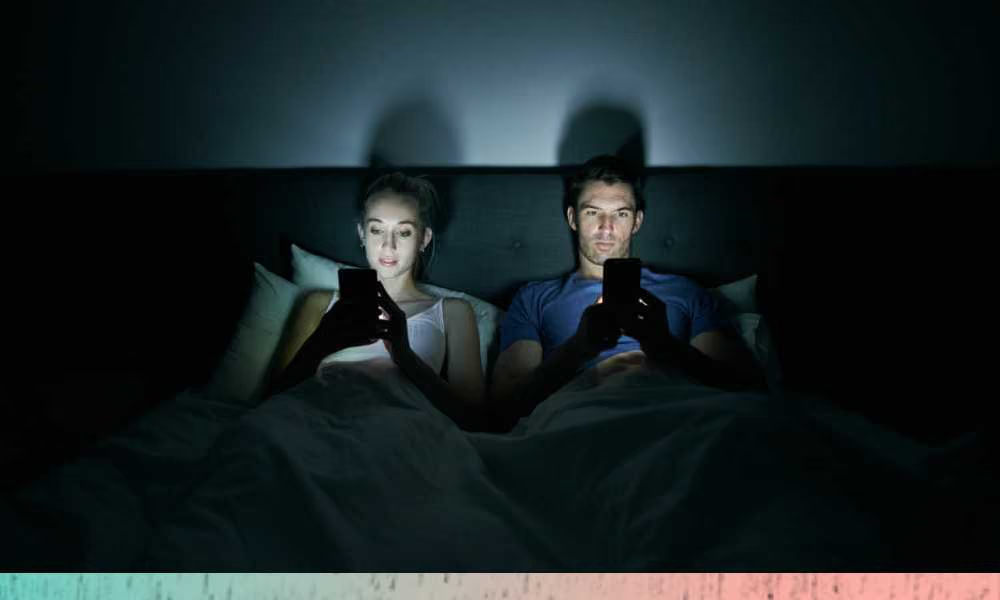
Doomscrolling is the habit of repeatedly consuming short-form content, particularly on social media, even when it makes you feel worse. If you have ever told yourself “just one more post” and then ended up feeling more anxious, helpless, or wired, you are not alone. Research on doomscrolling is still relatively new, but the evidence so far suggests it is linked with higher psychological distress, lower well-being, and poorer sleep.
What is Doomscrolling?
Doomscrolling usually refers to repeatedly scrolling through upsetting, threatening, or pessimistic news and social content, often for longer than you intended and often without feeling better afterward. It is not the same thing as staying informed. The difference is that staying informed tends to be intentional and time-limited, while doomscrolling tends to feel repetitive, urgent, and hard to disengage from.
Why is Doomscrolling so Addictive?
1. Your brain is built to notice threats
Human attention naturally gives extra weight to danger, conflict, and uncertainty. Researchers often describe this as a negativity bias: our brains are more likely to lock onto potential threats than neutral or reassuring information.
That bias can make negative headlines feel important, even when continuing to consume them is no longer useful.
2. Uncertainty makes people want “one more update”
One of the strongest psychological drivers behind doomscrolling appears to be intolerance of uncertainty. When the world feels unstable, the brain often tries to reduce that discomfort by checking for new information. The problem is that constant checking rarely creates real closure. Instead, it can keep the nervous system activated.
In other words, doomscrolling often feels like an attempt to gain control, but it can leave you feeling less grounded instead.
3. Fear of missing out keeps the loop going
Research suggests doomscrolling is associated with fear of missing out (FoMO), especially when people feel they need to stay constantly updated on what might happen next. That can create a powerful internal script: “If I stop scrolling, I might miss something important.”
Even when the content is distressing, that urge can keep you coming back.
4. Phones make the behavior frictionless
Doomscrolling is easy to repeat because the tools are always within reach. Some newer research suggests nomophobia, or distress around being separated from your phone, may help explain why doomscrolling is linked with poorer sleep and more persistent nighttime use.
That does not mean everyone who doomscrolls has nomophobia. It does mean that convenience, habit, and digital dependence can make it harder to stop.
5. It can become a form of emotional coping that backfires
Some people doomscroll because they are trying to feel prepared, less alone, or less caught off guard. But research suggests the behavior may actually amplify distress, helplessness, and rumination over time rather than relieve them.
That is part of what makes the cycle so frustrating. The behavior can feel purposeful while quietly making you feel worse.
How Can Doomscrolling Harm Your Mental Health?
The research is still developing, and many studies are correlational rather than proving direct causation. But the pattern is consistent enough to take seriously.
1. It is linked with more anxiety, stress, and distress
Higher doomscrolling is associated with more psychological distress, including more anxiety, stress, and depressive symptoms in multiple studies. Some researchers also suggest it can intensify helplessness and emotional reactivity, especially when the content is fear-inducing or crisis-driven.
2. It can lower well-being and life satisfaction
Research has found that people with higher doomscrolling scores also tend to report lower mental well-being, lower life satisfaction, and less harmony in life.
That matters because doomscrolling does not only affect how you feel in the moment. It may also shape your broader sense of outlook and stability.
3. It may increase rumination and pessimism
Some evidence suggests doomscrolling can reinforce repetitive negative thinking and make stress harder to shake. A 2024 cross-cultural study also linked doomscrolling with higher existential anxiety, suggesting that repeated exposure to negative news may deepen feelings of hopelessness or unease about the world.
4. It can disrupt sleep
This is one of the clearest patterns in the research. Doomscrolling has been linked with poorer sleep quality, and newer work suggests nighttime phone-related anxiety may partly explain that connection. Negative content can raise cognitive and emotional arousal right when your brain needs to wind down.
If you find yourself scrolling late at night and then feeling tired but unable to settle, that pattern makes sense.
5. It can make daily life feel smaller
Doomscrolling can pull attention away from work, relationships, rest, and activities that actually restore you. Some emerging research and commentary suggest it may also be tied to lower productivity, more social withdrawal, and difficulty focusing.
How Do You Know if You are Doomscrolling Instead of Staying Informed?
A few signs can help you tell the difference.
You may be doomscrolling if:
- you keep scrolling after you already feel overwhelmed
- you feel more agitated, hopeless, or wired afterward
- you check for updates compulsively, especially at night
- you tell yourself it is “important” even when the content is repetitive
- you have trouble stopping, even when you want to
- your mood, sleep, or focus is getting worse
Staying informed usually leaves you oriented. Doomscrolling usually leaves you depleted.
How Do You Break the Doomscrolling Cycle?
The goal is not to become uninformed. The goal is to make your news and social media use more intentional and less punishing.
1. Put boundaries around when you consume news
If doomscrolling is strongest at night, do not make bedtime your news window. Research suggests doomscrolling and poor sleep are linked, so this is one of the highest-impact changes to try first.
A practical rule:
- no news in bed
- no scrolling for the last 30 to 60 minutes before sleep
- if you want updates, check them earlier in the day
If 30 to 60 minutes feels unrealistic, start smaller. Even a shorter buffer can help. Check out more tips for digital boundaries.
2. Replace endless scrolling with planned check-ins
Instead of checking whenever anxiety spikes, try deciding in advance when you will look at news.
For example:
- once in the morning
- once mid-afternoon
- not after dinner
This helps interrupt the “just one more update” loop that uncertainty can create.
3. Add friction to the habit
Because doomscrolling is easy and automatic, even small barriers can help.
You might:
- move news apps off your home screen
- log out of social apps at night
- turn off nonessential alerts
- charge your phone outside the bedroom
- use app timers or focus settings
4. Notice what emotion is driving the urge
Before you open the app, pause and ask:
- Am I looking for useful information?
- Or am I anxious, lonely, restless, angry, or trying to feel in control?
That question matters because doomscrolling often behaves like a coping strategy. If you can identify the real need, you can choose a response that actually helps.
For example:
- anxiety → try a grounding exercise before checking
- loneliness → text a friend instead
- uncertainty → write down the specific question you want answered
- overwhelm → step away from the feed completely for 10 minutes
5. Shift from passive intake to active response
One of the hardest parts of doomscrolling is feeling flooded and powerless. If a story matters to you, ask whether there is a constructive next step:
- donate
- volunteer
- contact a representative
- support someone affected
- choose one credible source to follow instead of twenty reactive ones
A good rule of thumb is this: if the content is increasing your sense of alarm without increasing your ability to act, it may not be helping.
6. Curate your inputs more carefully
Not all information environments are equal. Some feeds are designed to keep you emotionally activated.
Consider:
- unfollowing accounts that constantly sensationalize
- muting topics that are overwhelming you
- choosing one or two reliable sources over algorithm-heavy feeds
- following some grounding, practical, or hopeful content too
This is not avoidance. It is emotional hygiene.
7. Build a short “exit routine”
When you notice you are stuck, it helps to know exactly how to get out.
Try a simple sequence:
- Put the phone down.
- Stand up and move your body.
- Take five slower breaths.
- Name one thing you can control today.
- Do one offline action for five minutes.
The point is to interrupt the loop before your mind talks you back into it.
What if Doomscrolling Feels Hard to Stop?
If doomscrolling is affecting your sleep, mood, concentration, or daily functioning, it may be worth getting support. The urge to keep scanning for threats can overlap with anxiety, stress, compulsive reassurance-seeking, or emotion regulation difficulties.
That does not mean something is “wrong” with you. It may simply mean your nervous system is overloaded.
Talking with a licensed mental health professional may help if:
- you feel chronically on edge
- you cannot stop checking despite wanting to
- your sleep is being disrupted
- doomscrolling is worsening anxiety or hopelessness
- it feels tied to panic, health anxiety, trauma, or obsessive worry
Frequently Asked Questions
Is doomscrolling bad for mental health?
It can be. The current evidence suggests doomscrolling is associated with higher distress, lower well-being, more anxiety, and poorer sleep.
Why do I keep doomscrolling if it makes me feel worse?
Because the behavior often taps into very human processes: threat detection, uncertainty, FoMO, and the hope that one more update will make things feel more manageable.
Is doomscrolling a real addiction?
Doomscrolling is not currently a formal mental health term. It is not a recognized diagnosis. But research does suggest it can become compulsive and self-reinforcing.
Does doomscrolling affect sleep?
Yes, it appears to. Several studies link doomscrolling with poorer sleep quality, especially when it happens at night and keeps the brain in a more activated state.
What is the fastest way to start breaking the habit?
For many people, the most effective first step is to stop mixing doomscrolling with bedtime. A close second is setting planned times to check the news instead of checking whenever anxiety spikes.
Doomscrolling can feel compelling because it plays on threat sensitivity, uncertainty, FoMO, and the brain’s desire to stay prepared. But over time, it may leave you more anxious, less rested, and less grounded.
If you want to break the cycle, start small:
- move news out of bedtime
- check on purpose, not on impulse
- add friction to the habit
- notice the feeling underneath the urge
- choose action or rest over endless monitoring
Research on doomscrolling is still evolving, so recommendations may sharpen as the evidence grows. But the current picture is already clear enough to support one gentle truth: staying informed should not come at the cost of your peace.